The noise started first.
A rattling mower, a leaf blower whining two gardens over, a chainsaw somewhere on the next street. It was just after lunch, the air heavy and still, and yet the whole neighborhood sounded like a construction site.
Now imagine that same scene after February 21.
Silence between noon and 4 p.m.
No lawnmowers, no edge trimmers, no “just a quick tidy-up before the school run.”
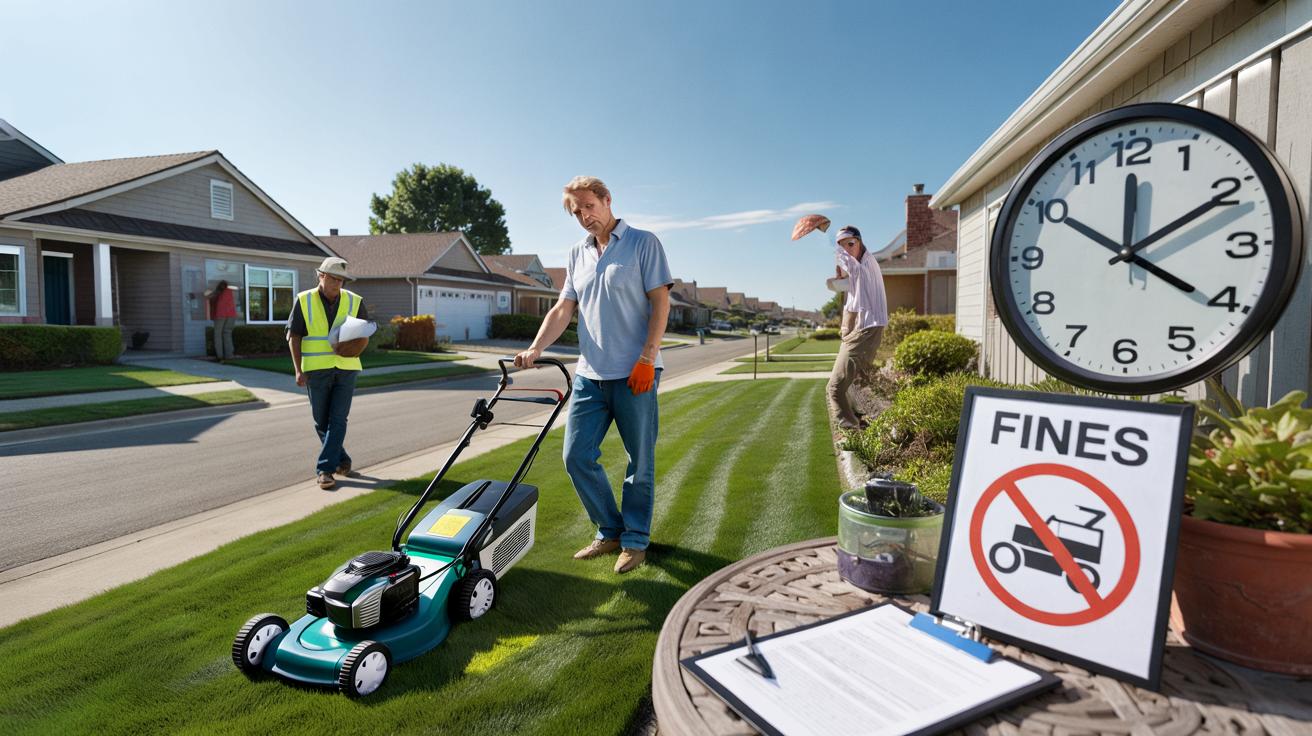
A new rule landing on February 21 plans to outlaw lawn mowing in that midday slot. Fines attached. Inspectors empowered. Neighbors already sharpening their opinions.
On paper, it’s about noise, heat, pollution, and public health.
On the ground, it’s about routines, weekends, and those precious hours when most people can actually mow.
And for a lot of homeowners, it’s going to sting in a very practical way.
What this noon-to-4 p.m. lawn ban really changes
For years, midday has been prime mowing time.
Kids at school, partner at work, sun high enough to see what you’re doing, no dew on the grass. Many people plan their whole Saturday around that simple, slightly boring chore.
From February 21, that window slams shut.
The new rule bans lawn mowing between noon and 4 p.m., with the threat of fines for those who still fire up the mower. Depending on your local council’s enforcement policy, that could mean a warning, then a penalty, or straight to a ticket if someone complains.
It sounds like a small shift on paper.
On the calendars of real families, it scrambles everything.
Picture Claire, 38, single mum, full-time job.
She leaves home at 7:30 a.m., gets back close to 6 p.m. By the time dinner, homework, and laundry are done, the garden is the last thing on her mind. Her only real slot for mowing? Saturday after lunch, when her daughter is at a friend’s house and the sun has climbed higher.
Under the new rule, that easy rhythm collapses.
The only “legal” times left are early morning or late afternoon, often when she’s juggling activities or finally resting. So she has to choose: wake the neighbors at 8 a.m. with the mower, or let the grass grow wild and risk the landlord’s complaints.
We’ve all been there, that moment when a simple rule suddenly bumps into the messy reality of real life.
Behind the ban, there’s a logic that’s hard to ignore.
Midday is when heat and ozone levels spike, when gasoline engines pump out the most fumes, and when noise travels furthest in the still air. Health experts have been warning for years about the cocktail of noise, particles, and stress that small engines release in residential areas.
Local officials see it in numbers: noise complaints peaking around lunch, neighbors arguing about “that one guy who always mows at nap time,” emergency rooms treating people who passed out gardening in full sun.
The rule tries to push noisy work into cooler, less sensitive hours.
Less pollution, fewer heat-related incidents, quieter siestas, calmer pets, sleeping babies left in peace. On a community chart, it makes sense.
Inside your weekly schedule, it feels like someone just grabbed the eraser.
How to adapt your routine without losing your mind (or your lawn)
The first thing to rethink is timing.
If noon to 4 p.m. is out, the best mowing slots become early morning (before 10 a.m.) or late afternoon/early evening. Grass is less stressed then, the sun is softer, and you’re on the right side of the new rule.
One practical trick: treat mowing like a fixed appointment.
Pick a day and a time that fits your life rhythm, and block it in your calendar like you would a meeting or workout. That way, you’re not staring at the garden every week thinking, “I’ll do it later,” and suddenly it’s 1 p.m. and you’re shut down by the law.
It sounds boring, but routines are what save you from surprise fines.
There’s also a big opportunity hiding in this annoying rule.
If you’ve been flirting with the idea of an electric or robotic mower, this might be the nudge. Many councils are hinting that inspections will focus first on noisy gasoline models, the ones that sound like a small motorcycle revving next to your fence.
Electric mowers are quieter, easier to use in the cooler hours, and some models can even be scheduled automatically. You’re asleep, and the robot is trimming at 7:30 a.m. while birds are still louder than the blades.
Let’s be honest: nobody really reads every line of their council’s regulation booklet.
That’s why so many people are caught off guard by these bans. If you rent, own, or manage a property with a yard, now is the time to ask one simple question: “What exactly counts as a violation here?”
This is where talking to neighbors and local officials matters more than scrolling angry comments online.
Ask your council how strict they plan to be, what the real fine amounts are, and whether there is any flexibility for special cases such as shift workers or elderly homeowners with limited help.
“People hear ‘ban’ and think we’re out to punish them,” one municipal officer told us off the record. “We’re trying to cut peak noise and heat stress. The goal isn’t to turn everyone’s lawn into a jungle, it’s to nudge habits.”
*Underneath the legal wording, this is really a negotiation between comfort, health, and habit.*
To stay on the safe side, keep this mental checklist handy:
- Check your local council website for the exact mowing time windows.
- Note whether weekends and public holidays have different rules.
- Switch to quieter equipment if you can, especially in dense neighborhoods.
- Talk with direct neighbors about a shared “quiet period” that suits everyone.
- If you get a warning, ask politely for the specific clause you broke, then adjust.
The deeper question: what kind of neighborhood do we want?
Beyond the practical headache, this new rule pokes at a bigger tension.
We say we want calm, green, livable neighborhoods. Then we also want perfectly manicured lawns, squeezed into the only free hours left between work, kids, and life. The two don’t always fit neatly together.
Some will see this noon-to-4 p.m. ban as another piece of red tape, another step in a long march of “you can’t do this, you can’t do that.” Others will quietly breathe out, finally able to nap at lunchtime without a mower roaring through their open window.
There’s also a cultural shift here.
More drought-tolerant gardens, taller grass, wilder corners for insects and birds. **Less obsession with the postcard-perfect, shaved-every-Saturday lawn.** Maybe the law doesn’t create this change, but it accelerates a trend already in motion.
As February 21 approaches, one question hangs in the air: will this rule pull neighbors further apart with complaints and finger-pointing, or push them to talk, organize, and find a shared rhythm for living side by side?
| Key point | Detail | Value for the reader |
|---|---|---|
| Noon–4 p.m. mowing ban | New rule from February 21 blocks lawn mowing in this time slot, with possible fines | Helps you avoid penalties and angry neighbors by adjusting your schedule now |
| Smarter planning | Shift mowing to early morning or late afternoon and treat it like a fixed appointment | Keeps your lawn under control without breaking the rule or burning weekend time |
| Equipment & habits | Quieter electric tools, shared neighbor agreements, and looser lawn standards | Reduces stress, noise, and conflict while keeping your outdoor space enjoyable |
FAQ:
- Can I really be fined for mowing between noon and 4 p.m.?The text of the rule allows fines, yes. In practice, many councils will start with warnings, but repeat or loud offenders can expect penalties if neighbors complain.
- Does the ban apply every day or just weekends?That depends on your local authority. The core idea is noon–4 p.m., but some areas may apply it daily, others only on weekends and public holidays. Always check your local by-laws.
- What about electric or manual mowers, are they also banned?Most versions of the rule target “lawn mowing” by time, not by machine type, so electric and manual tools fall under the same window. That said, quieter gear is far less likely to trigger a complaint outside the restricted hours.
- Can professional gardeners work at noon if I hire them?Hiring a professional doesn’t exempt you from the time restriction. If they mow during the banned hours, you and the contractor may both be liable, depending on how your area enforces the rule.
- What if my schedule makes mowing outside those hours almost impossible?Talk to your council. Some areas offer case-by-case flexibility or suggest alternatives such as shared services, robotic mowers, or adjusted hours on certain days. It’s worth asking before you assume there’s no wiggle room.