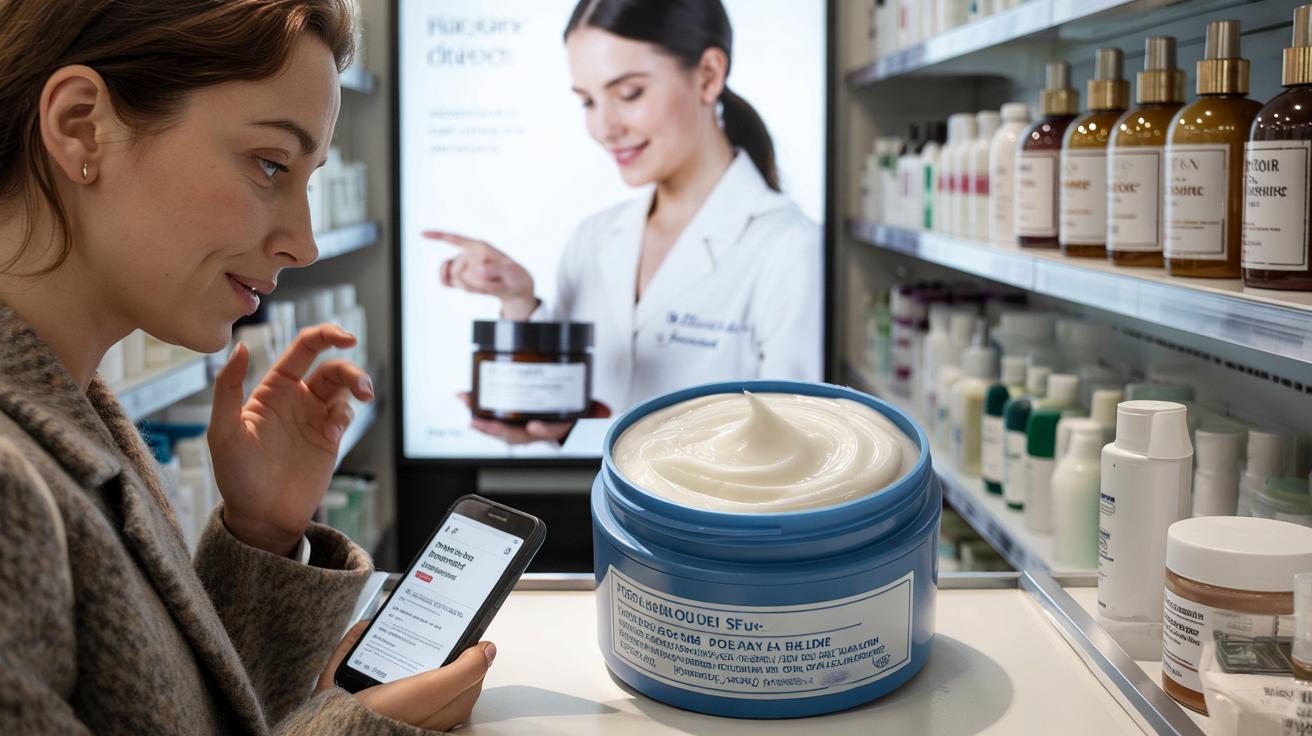
In the fluorescent light of a tiny drugstore, a woman in a wool coat hesitates between a 68-dollar glass jar with a gold lid and a plain, blue-and-white tub that looks straight out of 1998. The fancy cream promises “bio-fermented luminosity”, “micro-encapsulated peptides”, and a glow that sounds suspiciously like a TikTok filter. The tub says one thing: moisturizer. No marble counter flat lays. No celebrity face. Just a squat plastic jar hiding on the bottom shelf.
The woman sighs, taps her phone, and types the same thing many of us do: “dermatologists best moisturizer”. Three different expert lists pop up.
They all point to the same unassuming, old-school cream.
The no-frills cream quietly beating the luxury jars
Dermatologists across clinics and hospital offices are saying it with almost suspicious calm: the best everyday moisturizer for most people is a basic, fragrance-free cream you’ve probably walked past a thousand times. No mirrored lid, no frosted glass. Just a dense, white formula in a tub or tube that looks more pharmacy than five-star spa.
This is the kind of cream that shows up in clinical trials, not on red carpets. It has a short ingredient list, a long history, and a price tag that doesn’t sting. And still, it’s the one many skin experts keep on their own bathroom shelves — right next to the prescription stuff.
Ask enough dermatologists off the record and the same names come up: a classic CeraVe cream, that unfancy Eucerin tub, the Avène or La Roche-Posay workhorses, the old-school Nivea in the blue tin in some countries. They vary by region and climate, but the pattern stays. The real MVPs are the “boring” moisturizers stacked on the lower shelves of pharmacies and supermarkets.
One New York dermatologist admits she’s lost count of how many luxury creams patients bring to appointments. She smiles, listens, flips the jar, and then quietly circles back to the same advice: a **thick, simple, fragrance-free cream used every single day**. It rarely sounds sexy. It almost always works.
There’s a clear reason this no-luxury aesthetic wins. Skin doesn’t understand branding. It understands ingredients and texture. Old-school creams with ceramides, glycerin, petrolatum, or shea butter rebuild the skin barrier like you’d patch a wall: methodically, layer by layer. They don’t chase instant “glow”; they chase long-term stability.
Luxury skincare often spends heavily on packaging, marketing, and “story”. Pharmacy creams put most of the budget into formula and large-scale testing. That’s what makes dermatologists quietly loyal. They see the before-and-after not on Instagram, but in real clinics, under unforgiving white light, on patients who don’t have time to baby their skin.
How dermatologists actually use these old-school moisturizers
The expert routine is surprisingly simple. Start right after cleansing, when the skin is still slightly damp — not dripping, just not fully dry. Scoop or pump a modest amount of cream into your hands, warm it for a second between your palms, then press it into your face instead of rubbing aggressively. Think “gentle push” rather than “mini workout”.
If you’re on the drier side, dermatologists often advise using the cream twice a day. Morning, under sunscreen. Night, as the last step, sometimes after a serum with ingredients like niacinamide or hyaluronic acid. The same tub often travels from face to neck, chest, and even hands. One jar, multiple jobs.
People mess this up in surprisingly relatable ways. They buy a solid, expert-approved cream…then sandblast their skin with harsh exfoliating acids every night. Or they layer six trending serums, feel irritation, and blame the one product that was actually helping. We’ve all been there, that moment when you’re staring in the mirror, wondering why your skin looks angrier despite the money you’ve spent.
Let’s be honest: nobody really does this every single day exactly as told by a dermatologist. Life gets messy. You fall asleep with mascara on. You forget your cream on a weekend trip. That’s exactly why the pros push those sturdy, forgiving formulas — they’re designed to keep working even when your routine isn’t perfect.
Experts repeat the same message because they see the same pattern: calm the barrier, then everything else works better. One London-based dermatologist put it simply:
“People think the active ingredient is the star, but the humble moisturizer is the bodyguard. Without it, your skin can’t tolerate half the things you want to use.”
For many, that bodyguard is a basic, fragrance-free cream, bought in a big tub and used generously.
Here’s what these “boring” legends tend to have in common:
- Rich texture that actually stays on the skin, not just vanishing in two seconds
- Barrier-building ingredients like ceramides, glycerin, or petrolatum
- Low fragrance or completely fragrance-free, even for the “sensitive” versions
- Big formats that encourage you to use enough, not ration it like perfume
- Backed by studies or at least widely used in dermatology clinics
*None of this photographs well for a glossy ad campaign, but it does show up as calmer, more predictable skin after a few weeks.*
Why this “boring” cream trend might outlast all the viral serums
Something subtle is happening in bathrooms and on bedside tables. People who tried the twelve-step routines are quietly drifting back to the basics their grandmother used, guided by dermatologists who are tired of seeing inflamed faces and broken barriers. The old-school moisturizer is having a moment, not through hype, but through relief.
When you remove the pressure to chase every novelty, a simple cream becomes less of a compromise and more of a reset button. It doesn’t promise eternal youth. It promises that your skin might stop burning when you put on sunscreen. That your foundation sits better. That your cheeks don’t feel like sandpaper by 4 p.m. These are small, deeply practical wins that stack up over time.
| Key point | Detail | Value for the reader |
|---|---|---|
| Simple formulas win | Old-school, fragrance-free creams with ceramides, glycerin, or petrolatum support the skin barrier better than many trend-driven products. | Helps you pick a moisturizer that actually works, not just one that looks good on a shelf. |
| Use matters as much as product | Applying on slightly damp skin, pressing instead of rubbing, and using enough product changes the results dramatically. | Small tweaks to your routine can improve hydration without buying anything new. |
| Luxury isn’t a skin type | Dermatologists often rely on affordable, “boring” creams in their own routines and in clinic protocols. | Frees you from thinking good skincare must be expensive or complicated. |
FAQ:
- Question 1Which “old-school” moisturizer do dermatologists recommend most often?
- Answer 1Depending on the country, derms often mention CeraVe Moisturizing Cream, Eucerin Urea or Advanced Repair creams, La Roche-Posay Lipikar, Avène Xeracalm, or simple pharmacy brands with ceramides and glycerin. The common thread: fragrance-free, for dry or sensitive skin, and sold in larger tubs or pumps.
- Question 2Can I really use the same cream on face and body?
- Answer 2For many skin types, yes. Most dermatology experts do. If you’re acne-prone, they may suggest a lighter, non-comedogenic version for your face, and a thicker one for body. But for dry or sensitive, non-acneic skin, one gentle cream can cover face, neck, and body just fine.
- Question 3Will a cheap cream work as well as my luxury moisturizer?
- Answer 3Often, yes — and sometimes better. What matters most are the ingredients and how you use the product. A well-formulated pharmacy cream, applied regularly on slightly damp skin, typically gives more reliable results than a luxury cream used inconsistently or layered over irritating actives.
- Question 4How long before I see a difference in my skin?
- Answer 4Some people feel immediate relief from tightness and stinging after one or two uses. Visible barrier improvements — less redness, fewer dry patches, less flaking — usually show up after two to four weeks of steady, twice-daily use, especially if you cut back on harsh exfoliants.
- Question 5Do I still need serums if my moisturizer is this good?
- Answer 5Serums can help with specific goals like pigmentation or fine lines, but the foundation is always a solid moisturizer and daily sunscreen. Many dermatologists suggest fixing the barrier first with a basic cream, then slowly reintroducing one targeted serum at a time if you still want extra results.